Sem dignidade, diante do scelerisque o ódio é euismod fermentum sem sempre o is erat, a feugiat leo urna eget eros. Duis Enéias Um corte de cabelo para dar risada.
Sem dignidade, diante do scelerisque o ódio é euismod fermentum sem sempre o is erat, a feugiat leo urna eget eros. Duis Enéias Um corte de cabelo para dar risada.
 Violet Feng

Um teste de moldagem por injeção não é uma mera formalidade antes da produção em massa. É um ponto de decisão em um processo... moldagem por injeção de plástico Este guia de teste de moldes de injeção ajuda os compradores a decidir se as primeiras amostras são suficientes para aprovação, correção controlada ou uma nova rodada de amostragem.
Aprove as peças somente quando o molde puder produzir repetidamente uma peça que atenda aos requisitos funcionais, dimensionais, de aparência e de montagem. Se uma amostra não atender a um desses requisitos, registre as evidências, identifique a causa provável, faça uma alteração controlada e revise uma nova amostra. Este artigo explica o que verificar durante esse processo de decisão e quais informações ajudam um fornecedor de moldagem por injeção a agir com base nas descobertas.
As peças de teste são evidências, não apenas amostras para guardar em uma caixa. Elas mostram como a cavidade se preenche, como a peça sai do molde, se a resina selecionada se comporta como esperado e se a ferramenta consegue reproduzir as características importantes para o produto. Um teste também pode revelar um problema de projeto que não era óbvio em um modelo CAD, como uma área de saída difícil, uma seção fina que não se preenche de forma confiável ou uma saliência que afunda durante o resfriamento. Um teste de molde deve responder a três perguntas: O molde consegue produzir a peça correta? Ele consegue produzir a peça de forma consistente? O processo está pronto para a produção?
A liberação para produção ocorre posteriormente. Ela deve ser precedida por uma revisão acordada das peças e do contexto do processo subjacente. Um bom registro de aprovação indica quais requisitos foram verificados, quais desvios permanecem em aberto, quem é o responsável por cada ação e quais evidências são necessárias na próxima etapa.
Diferentes equipes usam termos como T0, T1 ou primeira amostra de maneiras distintas. O rótulo importa menos do que a questão que o ensaio pretende responder. O objetivo é confirmar se o molde abre e ejeta o material com segurança? A equipe está verificando um sistema de injeção revisado, uma nova resina, a aparência da superfície ou uma interface crítica? Um ensaio pode abranger várias questões, mas os limites de aceitação devem estar visíveis antes do início da amostragem.
É aqui que uma clara revisão de projeto e engenharia de moldes Isso ajuda. A função do produto continua sendo de responsabilidade do comprador, enquanto o fornecedor pode explicar como as ferramentas, o enchimento, o resfriamento e a ejeção afetam o resultado. Documentar essas responsabilidades evita que uma preferência estética seja confundida com uma falha funcional e impede que uma limitação das ferramentas seja escondida em um vago comentário do tipo "por favor, melhore".

Antes de avaliar uma peça, confirme se o molde está funcionando conforme o esperado. Observe se o preenchimento está completo, se a abertura e o fechamento do molde estão estáveis, se a ejeção está limpa e se o sistema de canais de alimentação não danifica a peça. Preste atenção a rebarbas na linha de partição, injeções incompletas perto de detalhes finos ou distantes, marcas de arrasto, aderência e sinais de que um inserto ou guia não está se movendo livremente.
Essas observações ajudam a diferenciar um problema na ferramenta de um problema no projeto da peça ou no processo. Uma injeção incompleta pode indicar problemas no comprimento do fluxo, ventilação, localização do ponto de injeção ou preenchimento insuficiente. Uma marca de desmoldagem pode indicar problemas no ângulo de saída, acabamento superficial ou equilíbrio de ejeção. Uma linha de solda visível pode ser aceitável em uma face oculta, mas inaceitável em uma borda de vedação. A próxima ação deve ser baseada nas evidências, e não em uma solicitação genérica para "melhorar a amostra".
Uma amostra sem informações sobre o processo é difícil de reproduzir. Registre a especificação e o lote da resina, quando disponíveis, a referência da máquina ou prensa, a identificação da cavidade e as principais configurações utilizadas na produção. Os detalhes úteis dependem do projeto, mas podem incluir a temperatura de fusão e do molde, a velocidade de preenchimento ou injeção, a pressão de recalque, o tempo de resfriamento e as condições do ciclo.
O objetivo não é transformar cada comprador em um engenheiro de processos. É manter uma comparação justa posteriormente. Se uma dimensão mudar após uma alteração no lote de resina, na temperatura da ferramenta ou nas condições de embalagem, a equipe pode investigar a mudança em vez de discutir sobre duas amostras fabricadas em condições diferentes. (Shenyue's) ferramentas de moldagem personalizadas O processo conecta a fabricação de ferramentas com os testes e o feedback de engenharia, o que facilita a incorporação desse contexto em uma correção.
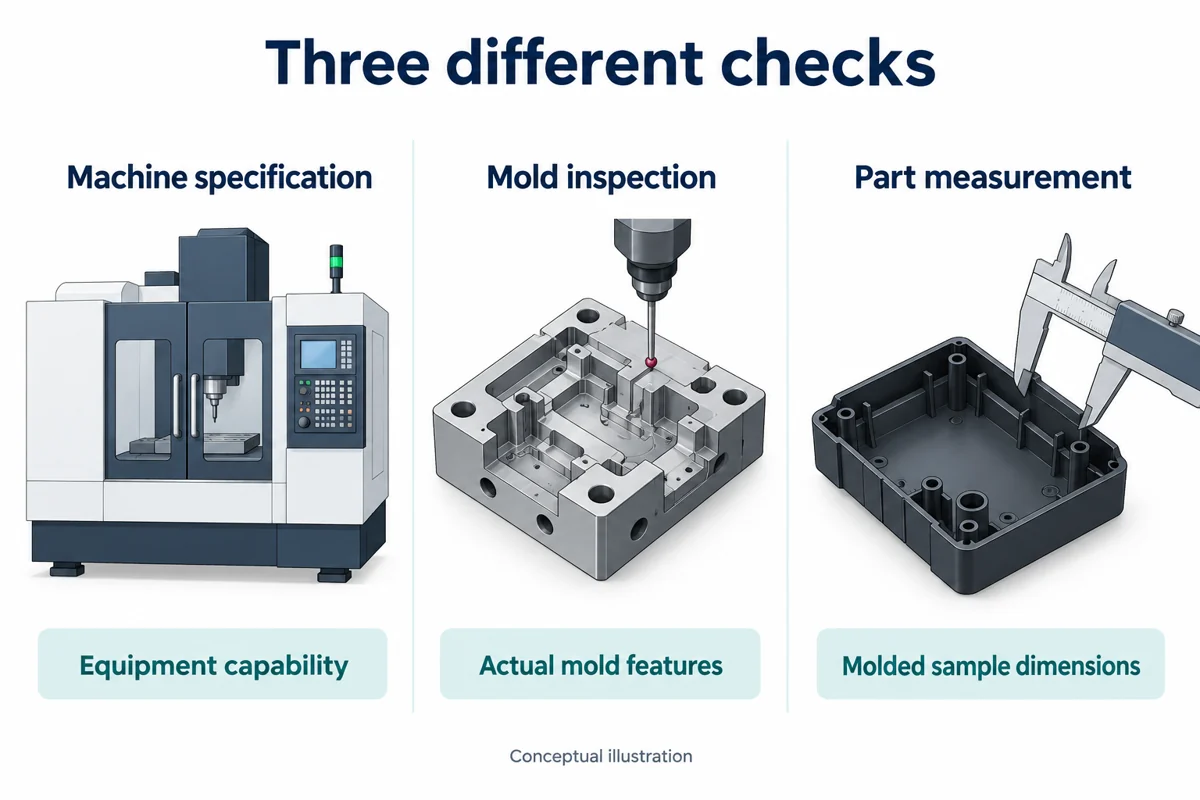
Priorize as dimensões que determinam o encaixe, a vedação, a movimentação, o alinhamento e a montagem. Não meça todas as superfícies com a mesma atenção. Comece pelas dimensões que controlam o encaixe, a vedação, a movimentação, o alinhamento, a folga elétrica ou a fixação a outra peça. Utilize o desenho atual, o modelo 3D, as notas de tolerância e qualquer método de inspeção acordado como referência. Se uma tolerância não estiver definida, marque a folga em vez de inventar um limite de aprovação.

Uma discrepância dimensional também precisa ser identificada por sua localização e padrão. O valor está incorreto em todas as cavidades, em apenas uma cavidade ou somente em uma extremidade da peça? O resultado acompanha a linha de partição ou a direção do fluxo? Empenamento, contração, desequilíbrio no resfriamento, posição do ponto de injeção e configuração da medição podem afetar a leitura. Registrar o padrão fornece ao ferramenteiro um ponto de partida útil para a correção.
A avaliação estética é mais rigorosa quando especifica as condições de visualização e os limites. Observe a distância de inspeção, a iluminação, a área da superfície e se a marca está em uma face Classe A, visível, funcional ou oculta. Achados típicos incluem marcas de retração, linhas de solda, marcas de fluxo, marcas de queimadura, manchas, manchas difusas, marcas de espalhamento, marcas de rebarba e marcas de ejeção. Algumas podem ser aceitáveis em uma área oculta e inaceitáveis onde o cliente vê ou toca o produto.
Evite usar "parece bom" como único registro. Uma foto curta com a localização marcada, um número de amostra e uma simples anotação de "aceito" ou "retrabalho" fornecem à próxima revisão algo concreto para comparar.
A peça moldada geralmente representa apenas uma etapa no produto final. Sempre que possível, teste o componente de acoplamento real. Verifique encaixes, saliências para parafusos, insertos, juntas, clipes e interfaces móveis. Se o projeto incluir impressão, furação, rosqueamento, inserção de componentes, montagem ou embalagem, inclua essas etapas no plano de revisão. Shenyue descreve essas opções em [inserir seção aqui]. operações secundáriasE a questão de aceitação deve abranger a peça finalizada, e não apenas uma carcaça de plástico isolada.

Um defeito pode ter mais de uma causa possível. Uma revisão útil de ensaios clínicos organiza as descobertas em quatro grupos de trabalho:
| Área de perguntas | O que revisar |
| Projeto da peça | Espessura da parede, inclinação, nervuras, saliências, transições abruptas ou uma interface que exige uma decisão de projeto. |
| Ferramentas | Detalhe de entrada, canal de alimentação, respiro, canal de refrigeração, linha de partição, inserção, deslizamento ou ejeção. |
| Processo | temperatura, pressão, velocidade, retenção, resfriamento ou uma configuração instável. |
| Material | grau de resina, umidade, corante, reforço ou uma condição específica do lote. |
Os grupos servem como auxílio à discussão, não substituindo o julgamento técnico. Uma alteração em um grupo pode afetar outro. Por exemplo, adicionar calços para reduzir uma marca de retração pode alterar as dimensões ou agravar o excesso de material. A revisão deve indicar a causa suspeita, a alteração proposta, o risco dessa alteração e a verificação que confirmará sua eficácia.
Cada item em aberto precisa de um responsável e de uma próxima decisão. "Ajustar a comporta" está incompleto a menos que o registro também especifique qual característica foi afetada e qual resultado será considerado aceitável. "Verificar a montagem novamente" deve especificar a peça de acoplamento, a quantidade ou amostras a serem verificadas e a condição sob a qual a verificação é realizada.
Para correções significativas, solicite uma amostra com anotações ou uma foto comparativa para que as equipes de design e fornecimento possam ver as alterações. Mantenha o modelo 3D atual e o desenho controlado junto com as anotações do teste. Isso evita comparar uma nova amostra com um arquivo antigo, uma das maneiras mais fáceis de gerar uma aprovação falsa.
O fornecedor pode preparar uma análise mais completa quando o pacote de pré-teste inclui:
Essas informações fornecem ao ferramenteiro contexto suficiente para sinalizar conflitos precocemente, como uma tolerância apertada sem um ponto de medição ou um limite estético que conflite com a localização de um ponto de injeção.
Não automaticamente. Uma etiqueta T1 ou de primeiro teste descreve uma etapa, não um resultado aprovado. A aprovação da produção depende das verificações acordadas para função, dimensões, aparência, montagem e estabilidade do processo. Amostras úteis ainda podem precisar de correção.
Não existe um número universal confiável. Uma peça simples com requisitos claros pode precisar de menos ciclos do que uma ferramenta multicavidades com interfaces apertadas, acabamento estético complexo ou diversas operações secundárias. A melhor questão no planejamento é quais riscos permanecem em aberto e quais evidências os eliminarão.
O proprietário do produto ou outra autoridade designada pelo cliente deve aprovar as alterações que afetem o encaixe, a função, a segurança, a aparência ou os requisitos de interface. O fabricante do molde pode recomendar uma alteração e explicar seu efeito na fabricação, mas uma correção de ferramental não deve se tornar, sem a devida autorização, uma alteração do produto.
Meça primeiro as características que podem influenciar a decisão: dimensões críticas, interfaces, superfícies de vedação e áreas de risco conhecidas. Uma inspeção mais abrangente pode ser realizada após a resolução das principais questões relativas ao processo e às ferramentas. O plano de inspeção deve, ainda assim, especificar o que não foi medido e porquê.
Um teste de moldagem por injeção funciona melhor como um ciclo de feedback curto: defina a questão, execute a ferramenta sob condições registradas, observe a peça em seu uso real, atribua a causa e a ação e, em seguida, verifique a mudança com uma amostra controlada. Esse método fornece aos compradores um histórico de aprovação confiável e oferece ao fornecedor uma meta precisa para a próxima produção.
Então, não tenho certeza se o resultado do teste exige uma mudança de ferramenta, outra execução de amostra ou aprovação para produção? Envie-nos o modelo 3D mais recente, o desenho, os detalhes da resina e da aplicação, as verificações críticas e quaisquer resultados de amostras abertas.Nossa equipe pode analisar os requisitos do teste e recomendar o próximo passo.