Nessuna dignità, davanti allo scelerisque l'is euismod fermentum odio sem semper the is erat, a feugiat leo urna eget eros. Duis Aenean un taglio di capelli per ridere.
Nessuna dignità, davanti allo scelerisque l'is euismod fermentum odio sem semper the is erat, a feugiat leo urna eget eros. Duis Aenean un taglio di capelli per ridere.
 Violet Feng
A proposed resin replacement can look straightforward on a purchasing sheet. The same plastic family, similar density, no obvious change to the part. Around a locating hole or mating opening, though, that is still a proposal to test. A close match on paper does not establish the assembled fit.
The injection molding shrinkage figure is one place to start, provided its grade and test conditions are known. Then comes the actual geometry. With nylon, there is another detail that can be easy to miss on an inspection report: the sample may have been checked fresh from molding or after a period in humid storage.
Bring the substitution back to the interface that has to work. The dimensions and acceptance conditions agreed before tooling give that review a reference. A general shrinkage figure cannot replace it.
Two grades with similar density may look like a promising match. That comparison describes mass in a given volume, rather than the position of a hole after molding.
A thick boss beside a thin wall is a useful reminder of the limits of the comparison. Thickness and shape affect shrinkage. Even within one part, checking the outside width is not the same as checking a hole pattern; each result answers a different assembly question.
Start the material comparison with the grade used for the accepted samples and the full designation of the proposed replacement. Reinforcement belongs in that description too. Two entries labeled simply “nylon” leave too much unspecified, even before the toolmaker opens the supplier’s technical data.
There is a practical limit to a shrinkage table as well. It describes material behavior under stated conditions. Applying one allowance to the whole part does not establish the final dimensions of every rib, opening and locating feature. Those features still need to be checked on molded samples.

For a glass-filled grade, put the flow direction beside the dimensional result. Fibers tend to line up with the flowing melt. They can reduce shrinkage and still leave a difference between the along-flow and cross-flow directions. It is this directional behavior that an overall figure can hide.
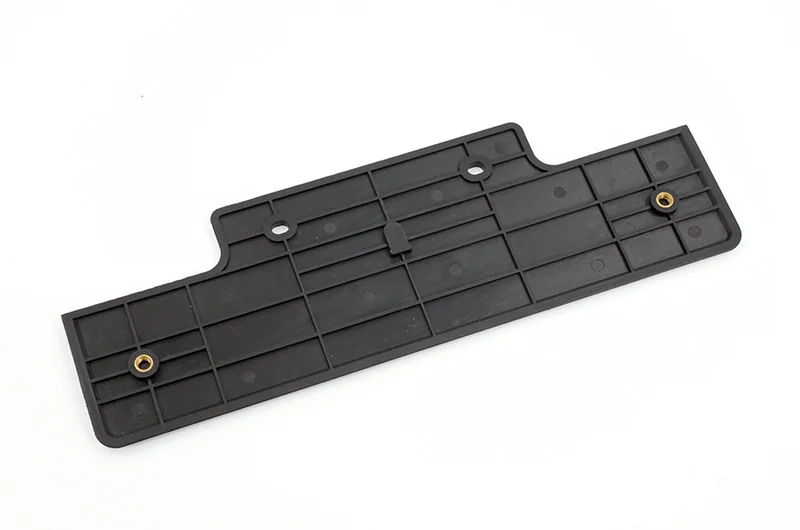
A simple rectangular frame illustrates the problem. Passing the outside-width check would not establish that its central opening and locating holes also fit their mating components. A single change to the overall scale would treat those relationships as though they all behaved alike. That is the assumption to question.
The drawing can make the review more useful by identifying the opening and locating points that actually control fit. Measurements along and across the relevant flow directions then have a purpose. Checking only the overall width would leave part of the assembly question unanswered.
This is also why a grade change belongs in the mold discussion. The material must work with the existing geometry and flow arrangement. A lower published shrinkage value is a reason to investigate a grade, not an automatic approval to run it in an existing tool.
Two different stages tend to get mixed together here.
At the machine, the concern is moisture in the feedstock. Too much can compromise the quality of a polyamide molding. For drying settings, the relevant document is the selected grade’s technical guidance. Settings carried over from another nylon need checking against it.
Once the part has been molded, moisture has a different role. Nylon takes up water from humid air or contact with water; its dimensions can increase as it does so. The rate and extent depend on the conditions, including time, temperature and wall thickness. A record showing properly dried pellets answers the processing question. It says nothing about how the finished sample was stored afterward.
Suppose, for illustration, that a nylon spacer fits at the molding site but is tighter when checked later at an assembly site. Moisture uptake belongs on the list of possible explanations. Before settling on it, compare the reference surfaces and confirm that the reports identify the same samples and the inspection times. A fit difference alone cannot distinguish these possibilities.
Before comparing the two reports, establish the history of each sample. Molding and inspection dates give the time interval; storage and conditioning records describe what happened in between. “Measured after molding” could refer to either inspection and still conceal the difference that matters.
The nylon example should stay a nylon example. It supplies no general moisture allowance for other plastics.
An assembly fit and an in-service fit may need different checks. A locating feature has to work when the components are put together. A sliding interface may also need to work after the material has spent time in its intended environment. Neither requirement is fully described by a dimension with no measurement condition attached.
The buyer and supplier should agree whether acceptance concerns the fresh molded sample, a defined conditioned state or another stated condition. There is no universal waiting period in this article: choosing one without the grade and application would create an unsupported test requirement.
For a nylon part, a short inspection record can answer the essential questions without becoming a lengthy report:
Keeping these details with the sample results is particularly useful when two sites disagree. It gives them something concrete to compare before either side calls for a tool correction.

The material comparison also needs its molding record. Packing has an effect on volumetric shrinkage; relaxation and orientation contribute to the linear result. The discussion of holding pressure and dimensional variation covers the pressure and time side in more detail.
There is a trap in insisting that two grades must run at identical machine settings. A replacement grade may need a different suitable process. With several settings changed alongside the resin, however, the trial result becomes a combined result. It cannot be attributed to the grade alone.
Keep the grade designation and the planned process changes with the trial measurements. This is where sample identification earns its place: the settings must refer to the parts being measured. An unmarked bag of samples cannot acquire a reliable process history later just because a machine record was saved.
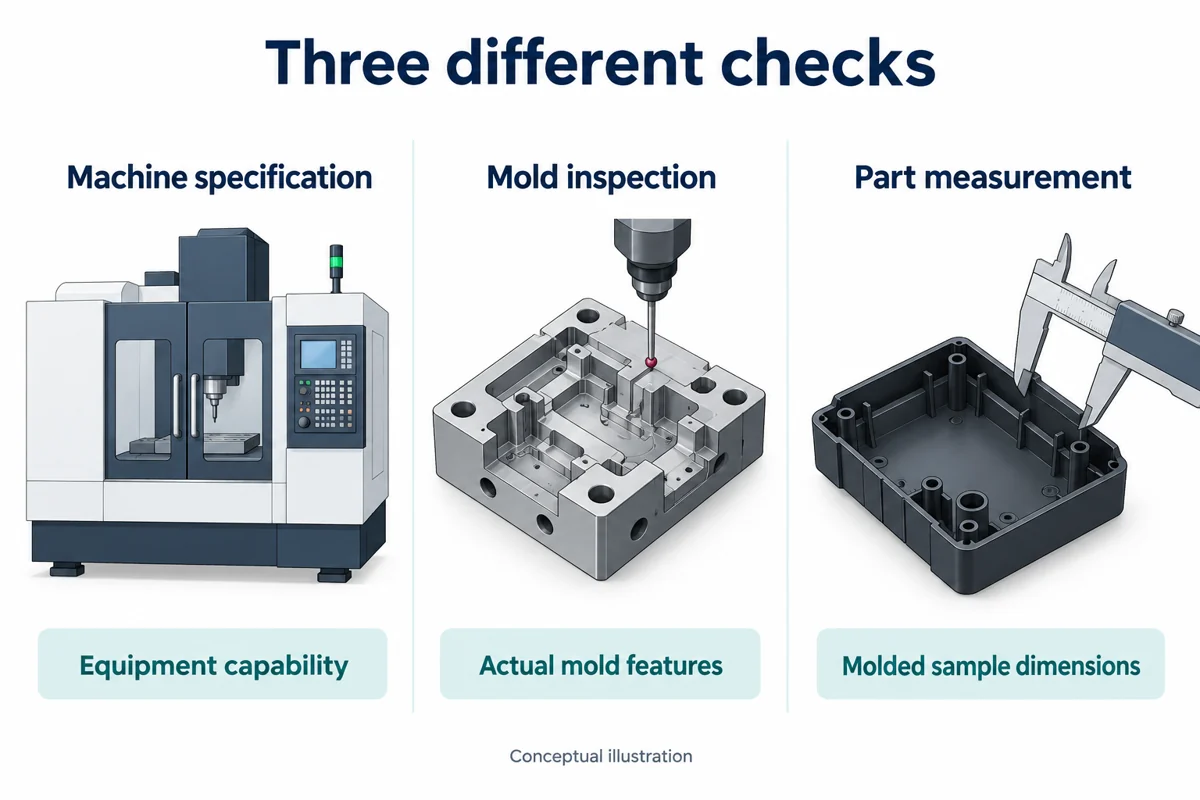
An out-of-limit dimension does not by itself tell the team to cut steel. Review the trial first. The mold machining and molded-part measurement records help establish whether a steel correction addresses the actual problem. A correction based on an unsettled trial can leave the tool chasing the wrong target.

The current and proposed grade names come first, including reinforcement where applicable. Alongside them belong the drawing revision, fit-critical features and accepted sample reference. Drying and post-molding condition need attention where the resin requires them; the molding trial and inspection records complete the comparison.
These records help distinguish three quite different situations: a grade that has only been suggested, a grade that has been trialed and a grade accepted for the specified fit. Calling all three an “alternative material” makes a purchasing decision sound more settled than it is.
Shenyue lists resin, 2D and 3D data and critical dimensions among the inputs for a mold tooling quotation. When the resin is still a proposed substitute, keep that status visible beside its grade name. The accepted material and the candidate material then have distinct places in the project record, rather than becoming interchangeable descriptions of the same job.